

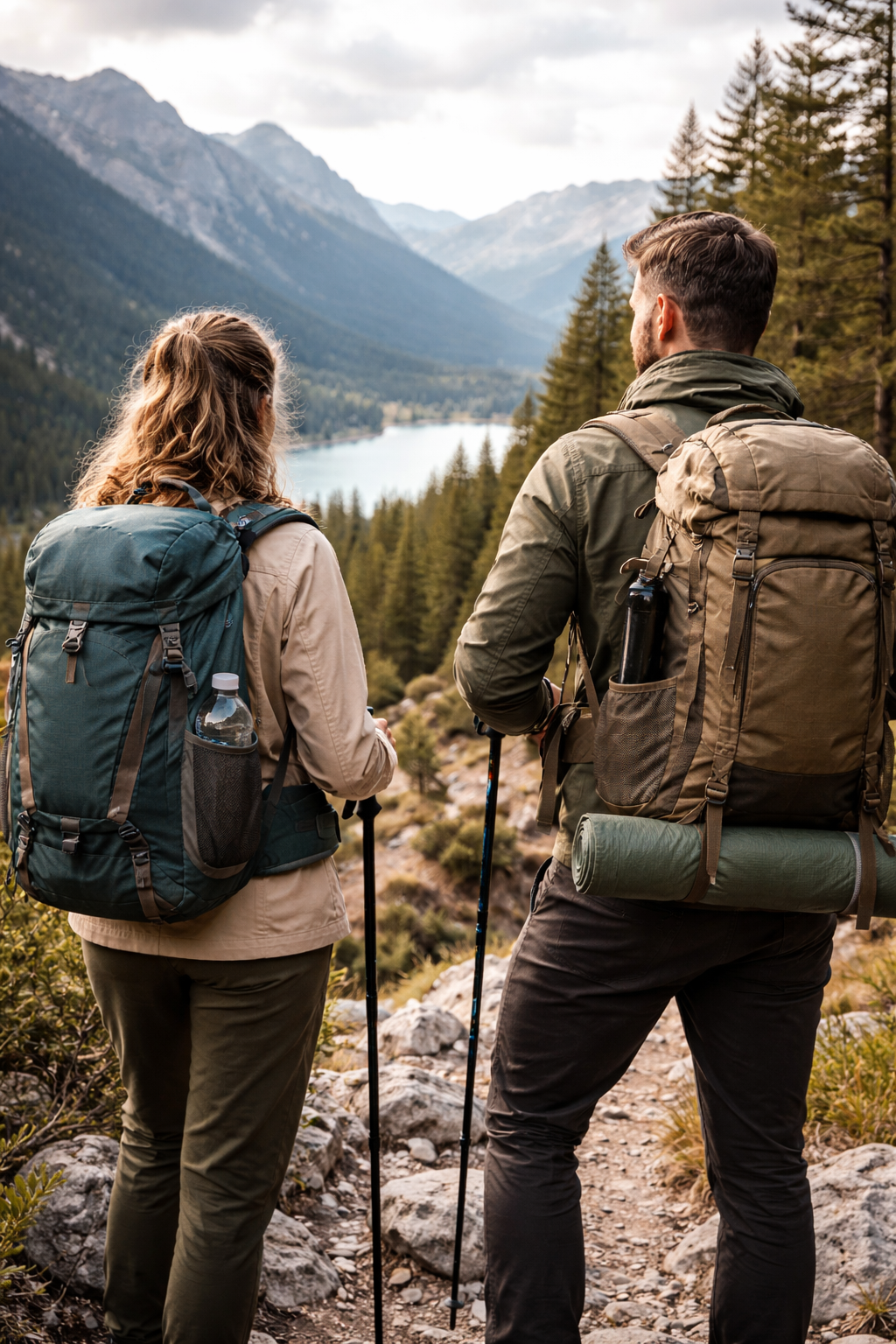
Trekking and hiking backpacks: performance, style, and freedom of movement
There's something you only understand when you start walking long distances: a backpack isn't an accessory, it's your companion.
It doesn't matter if you're climbing a mountain, going on a weekend hike, or deciding to get lost in a forest for hours. Your trekking backpack becomes an extension of you. It's what keeps you moving, what distributes the weight, what holds your world as you advance.
And this is where many people make a mistake.
They think any large backpack will do for hiking. But no. A well-designed trekking backpack completely changes the experience. And once you try a good one, there's no going back.
Let me tell you what makes a hiking backpack truly good—and how to choose one that fits your style and way of moving.
Which trekking backpack to choose based on capacity?
The first thing you need to understand is this: in hiking, it's not about carrying more, but about carrying better.
A trekking backpack can have 20L, 35L, or even 45L of capacity. But if the weight isn't well-distributed, every kilometer will feel twice as long.
For light trails and quick getaways, an ideal option is the
👉 Ultralight 20L Outdoor Sports Backpack – Breathable and Resistant
This type of backpack is perfect when you're looking for absolute lightness without sacrificing durability. Compact, functional, and comfortable for day hikes.
For those who need a bit more versatility, the 👉 Ultralight Hiking Backpack for Camping and Travel – Comfortable and Functional offers a balance between capacity and lightness, ideal for those who combine hiking with weekend getaways.
The right feeling is that the backpack integrates with your back, rather than pulling on your shoulders.
Lightweight hiking backpack for day hikes
This is the most important point and the least appreciated.
A trekking backpack should have:
-
Padded and breathable back
-
Adjustable ergonomic shoulder straps
-
Padded hip belt
-
Stabilizing chest strap
The 👉 WEIKANI Outdoor Backpack for Hiking and Trekking – Lightweight, Breathable, and Functional is a clear example of how ergonomics can change the experience. Its breathable design reduces heat buildup, while the lightweight structure prevents unnecessary overload.
If you've ever finished a trail with neck pain, your backpack was probably not well-adjusted.
A good backpack doesn't feel heavy, even when it is.
Ideal capacity: how many liters do you really need?
This is where strategy comes in.
20–25L
Perfect for short trips.
30–35L
Ideal for demanding hiking.
In this range, the 👉 Mountainhiker Outdoor Backpack 27–35L – Lightweight, Resistant, and Ergonomic stands out.
Its adjustable capacity allows it to adapt to different types of outings, from technical trekking to active travel.
40L or more
Designed for long trips or several days.
If you need greater capacity and maximum resistance, the 👉 Khaki Travel and Mountain Backpack for Men – Large Capacity and Maximum Resistance offers ample volume without compromising structure. Ideal for those seeking solid performance in the mountains.
More liters doesn't always mean a better option. The size should fit your actual adventure.
Materials: intelligent resistance
In the mountains, material isn't just aesthetics. It's survival.
Modern trekking backpacks use:
-
Resistant technical nylon
-
Waterproof fabrics
-
Reinforced seams
The 👉 Naturehike Outdoor Backpack 30+5L Coffee – Expandable, Comfortable, and Breathable combines intelligent expandability with wear-resistant materials, ideal for those who need adaptability without losing lightness.
The goal is clear: resistance without adding unnecessary weight.
Waterproofing: real protection in changing conditions
Hiking weather is unpredictable.
Models like the WEIKANI or Naturehike integrate water-resistant materials and structures prepared for unexpected weather changes.
You don't need to submerge it. You need to trust that it will protect your gear when the weather changes.
Compartments and organization: order in motion
Chaos inside your backpack is a waste of energy.
Backpacks like the Mountainhiker or Naturehike include:
-
Side pockets for bottles
-
Separate compartments
-
Pole attachment systems
-
Quick-access top spaces
Organization allows access to essentials without unpacking everything. And that, in the mountains, is key.
Outdoor aesthetics: functionality with character
Many believe that design doesn't matter in trekking. I disagree.
Colors like khaki, olive green, or technical gray convey resistance and coherence with the natural environment.
The khaki mountain backpack is a clear example of how design can be robust without losing identity.
A well-chosen backpack can accompany you in the mountains and also on urban getaways without looking out of place.
Current trends in trekking backpacks
Current trends combine:
-
Minimalist technical design
-
Ultralight material
-
Expandability
-
Advanced breathability
More and more people are looking for backpacks that work for both trekking and active travel.
Versatility is the new outdoor luxury.
How to choose the best trekking backpack for men and women
A well-designed trekking backpack not only improves your performance, it enhances your experience.
It should be lightweight yet durable.
Structured yet comfortable.
Functional yet aesthetic.
Models like the WEIKANI, Mountainhiker, or Naturehike demonstrate that performance and design can coexist perfectly.
When you find the right one, you're not just carrying gear.
You're carrying autonomy.
You're carrying balance.
You're carrying freedom.
And that's what really matters when you decide to go out and walk.

Leave a comment
This site is protected by hCaptcha and the hCaptcha Privacy Policy and Terms of Service apply.